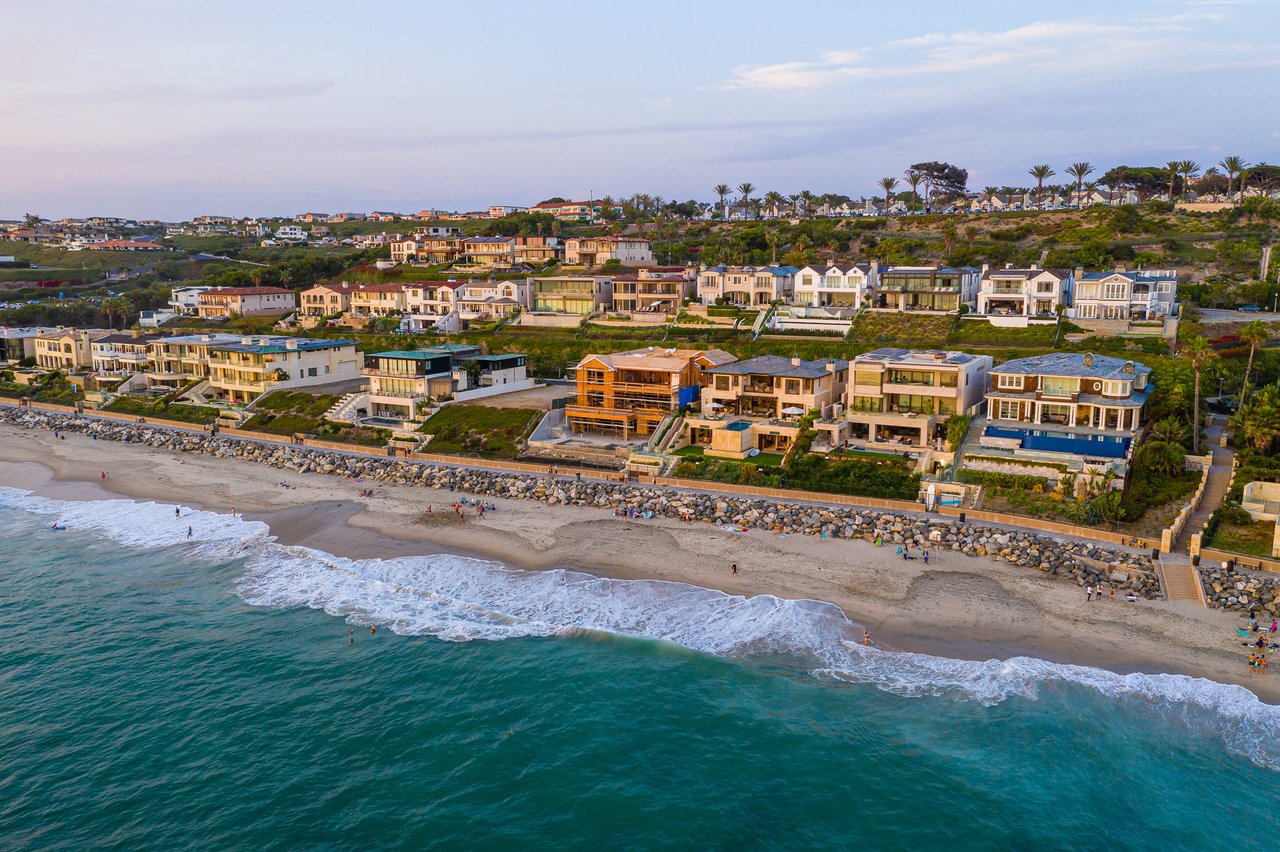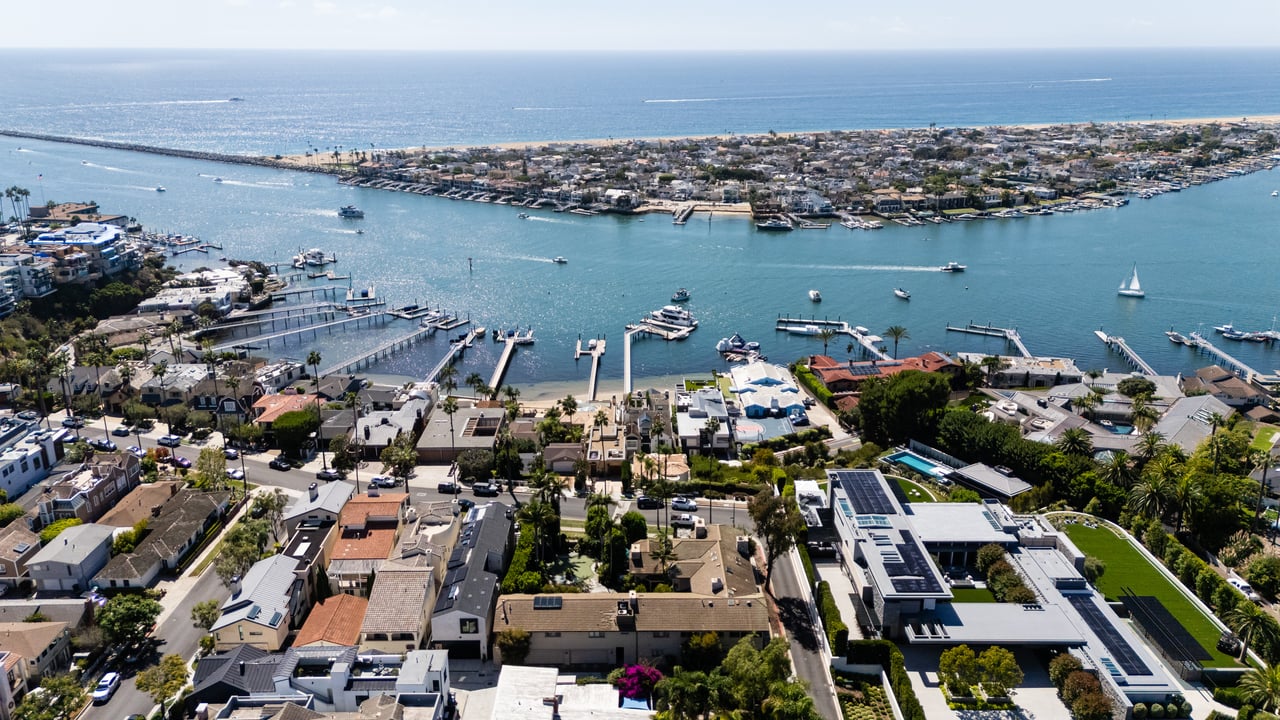

For a long time, Coastal Orange County was treated as a destination market. People moved here, bought homes, and stayed. That framework no longer holds.
Today, Coastal Orange County functions as part of a broader network of high-performing markets. Buyers are not arriving from one place and settling permanently. They are operating across regions, often simultaneously. They are allocating time, capital, and lifestyle across multiple homes, and Coastal Orange County has become one of the most important anchors in that structure.
This shift changes how transactions happen, how pricing behaves, and how advisors must operate.
Who Is Buying in Coastal Orange County Now
Buyers active in Coastal Orange County today are rarely first-time luxury buyers. Many already own in Los Angeles, San Francisco, Atherton, Montecito, or out of state. Others maintain residences in Aspen, the desert, Miami, or Las Vegas.
They are not choosing Coastal Orange County because it is trendy. They are choosing it because it works.
It offers coastal access without the congestion of Los Angeles. It offers space, schools, and predictability. It offers year-round livability rather than seasonal use. For many families, it becomes the place where life actually happens, even if other homes remain important.
From an advisory standpoint, this matters. These buyers are not negotiating in isolation. Every decision they make in Coastal Orange County is informed by what they own elsewhere and what they may do next.
Why Coastal Orange County Absorbs Cross-Market Demand So Well
Not every coastal market can absorb this kind of demand without destabilizing. Coastal Orange County can.
Inventory is finite. Governance is predictable. Neighborhoods have clear identities. Buyers understand what they are getting, and sellers are rarely forced.
This creates a negotiation environment that rewards patience and preparation. Buyers who arrive informed and advisors who manage timing carefully tend to perform well. Those who rush or overexpose often do not.
Unlike more volatile markets, Coastal Orange County supports both public and private transactions without stigma. A home can sell quietly or publicly without either path being interpreted as weakness.
That flexibility is increasingly valuable to buyers who want control.
How this affects pricing behavior
Pricing in Coastal Orange County is shaped by this cross-market demand. Buyers are often comparing opportunities in multiple regions at once. They understand value relative to alternatives.
This does not mean price sensitivity disappears. It means pricing decisions are contextual. Buyers ask different questions. They evaluate not just the home, but how it fits into a larger portfolio.
Advisors must understand these comparisons. A price that looks aggressive in isolation may be entirely reasonable when viewed against competing markets. Conversely, a price that feels conservative locally may not hold up when buyers weigh alternatives.
The Advisory Shift
This is where the role of the advisor becomes central.
Knowing Coastal Orange County alone is not enough. Advisors must understand how this market competes with and complements others. They must help clients decide when Coastal Orange County should be the anchor and when it should remain one piece of a larger strategy.
This level of guidance cannot be automated or scaled easily. It requires judgment, context, and restraint.
Why This Trend Is Not Reversing
The factors driving this shift are structural. Mobility has increased. Work has become more flexible. Families are more willing to divide time across regions. Privacy and predictability have become more valuable.
Coastal Orange County sits at the intersection of these trends. It is no longer a local market serving local buyers. It is a regional anchor serving clients who think nationally and globally.
Advisors who understand this will continue to deliver value. Those who treat Coastal Orange County as a self-contained market will struggle to explain what is happening.